Artificial intelligence has moved beyond simple chatbots. In 2026, tools such as ChatGPT, Google Gemini and Anthropic’s Claude can write articles, analyse documents, generate images, write computer code, conduct research and handle increasingly complex tasks.
But with all three becoming more capable, one question is becoming more difficult to answer: Which AI is actually the best in 2026?
The answer depends on what you want to do.
ChatGPT is arguably the strongest all-round AI assistant, Gemini is particularly attractive for people who rely heavily on the Google ecosystem and multimodal AI, while Claude remains a strong choice for writing, coding, analysis and long-running professional tasks.
This comparison looks at ChatGPT, Gemini and Claude based on their capabilities, strengths, weaknesses and practical use cases in 2026.
Editor’s note: AI models are being updated very quickly. This comparison reflects the AI landscape as of September 2026, rather than treating one benchmark as a permanent winner.
ChatGPT vs Gemini vs Claude at a Glance
| Feature | ChatGPT | Gemini | Claude |
|---|---|---|---|
| Developer | OpenAI | Anthropic | |
| Best for | General-purpose AI | Google ecosystem & multimodal work | Writing, coding & analysis |
| Coding | Excellent | Excellent | Excellent |
| Writing | Excellent | Very good | Excellent |
| Research | Excellent | Excellent | Excellent |
| Image generation | Yes | Yes | More limited |
| Image analysis | Yes | Yes | Yes |
| Video understanding | Yes, depending on model/features | Excellent | Available for visual analysis but less central |
| Voice | Yes | Yes | Yes |
| Long documents | Excellent | Excellent | Excellent |
| Google Workspace integration | Good | Excellent | Good |
| Best for beginners | Yes | Yes | Yes |
There is no universal winner. Your choice should depend on the type of work you expect the AI to perform.
1. ChatGPT: The Best All-Round AI Assistant
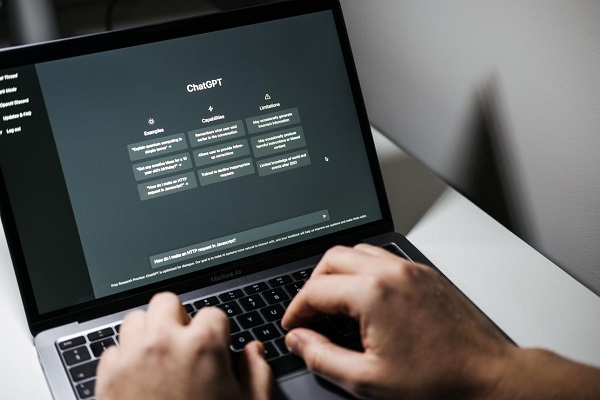
ChatGPT is developed by OpenAI and remains one of the most versatile AI assistants available.
Its capabilities have expanded considerably beyond ordinary question-and-answer conversations. Depending on the plan and available model, ChatGPT can help with research, writing, programming, data analysis, file analysis, image generation, voice conversations and more.
OpenAI’s GPT-5.6 family introduced models aimed at different performance and efficiency requirements, while GPT-6 Astra was introduced in September 2026 for more demanding organizational workloads but is still rolling out to a limited set of organizations rather than being generally available.
What ChatGPT does best
ChatGPT is particularly strong when you need one AI tool to handle many different tasks.
For example, a blogger could use ChatGPT to:
- Research an article topic
- Create an outline
- Write and edit the article
- Generate SEO ideas
- Analyse uploaded documents
- Create images
- Write HTML or CSS
- Analyse spreadsheet data
- Brainstorm headlines
- Summarise research
Its built-in tools also make it useful for people who don’t want to switch between multiple AI applications.
OpenAI says ChatGPT supports web search, deep research, image input and generation, file uploads, data analysis, voice, Canvas and memory, although availability varies by plan and configuration.
ChatGPT’s biggest advantage
Versatility.
If you want a single AI assistant for writing, research, coding, images, documents and general productivity, ChatGPT is difficult to overlook.
ChatGPT’s weakness
The biggest issue is that its capabilities and model availability can vary significantly between Free and paid plans.
Some of the most advanced capabilities may require a subscription or have usage limits.
2. Google Gemini: Best for Google Users and Multimodal Work
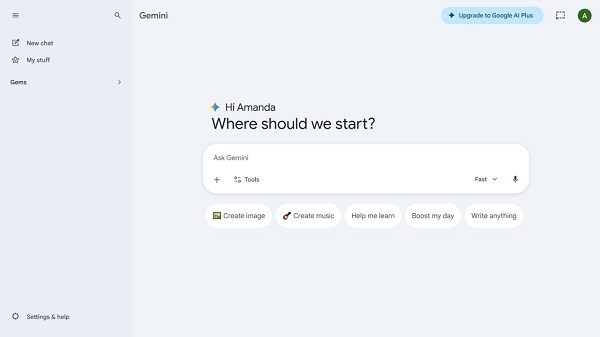
Google Gemini is Google’s answer to the rapidly evolving AI assistant market.
One of Gemini’s biggest advantages is its connection to Google’s enormous ecosystem.
If you already use services such as Gmail, Google Docs, Google Drive, Google Search, Android and other Google products, Gemini can become particularly useful.
Google’s Gemini model family has also been developing rapidly. In September 2026, Google introduced Gemini 3.8 Flash, describing it as its most intelligent workhorse model and highlighting improvements in software engineering, agentic tasks and multi-step reasoning. The model supports text, images, audio and video inputs with a context window of up to 1 million tokens.
What Gemini does best
Gemini is particularly attractive for multimodal tasks.
That means you can work with different types of information rather than just text.
For example, Gemini can work with:
- Text
- Images
- Audio
- Video
- Documents
- Code
Google has also been integrating Gemini more deeply into its products. Recent updates include improvements to Gemini Live, Google Workspace-related functionality and Android features.
Gemini’s biggest advantage
Google ecosystem integration and multimodal capabilities.
If your daily work already revolves around Gmail, Google Docs, Drive, Android or other Google services, Gemini can be a natural choice.
Gemini’s weakness
Gemini’s huge number of features can make the product landscape confusing.
Google also has several Gemini model variants and products, so users may need to understand which model or service they are actually using.
3. Claude: Best for Writing, Coding and Complex Analysis
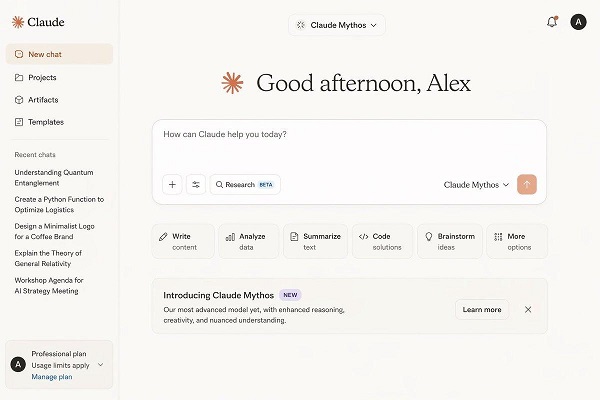
Claude is developed by Anthropic and has built a strong reputation among writers, developers, researchers and professionals.
Claude’s strength is not necessarily having the largest number of consumer features. Instead, many users choose it because of the quality of its reasoning, writing and coding assistance.
Anthropic’s Claude Opus 4.8, introduced in May 2026, brought improvements in coding, agentic tasks, reasoning and practical knowledge work. Anthropic also added effort controls that allow users to adjust how much computational effort Claude uses on a task.
Claude’s current product ecosystem also includes different model families, including Fable, Opus, Sonnet and Haiku.
What Claude does best
Claude is particularly useful for:
- Long-form writing
- Editing
- Code generation
- Code review
- Document analysis
- Technical explanations
- Brainstorming
- Complex reasoning
- Large professional projects
For example, if you have a long report and want an AI to analyse its arguments, identify weaknesses and help restructure it, Claude can be a strong option.
Claude’s biggest advantage
High-quality writing and complex knowledge work.
Claude is often a particularly good choice when you care more about the quality and structure of the response than having the largest collection of consumer features.
Claude’s weakness
Claude’s ecosystem is not as broad as Google’s or OpenAI’s.
For users who want native image generation, a large collection of consumer-facing tools and an extensive ecosystem, ChatGPT or Gemini may be more attractive.
ChatGPT vs Gemini vs Claude: Which Is Better for Writing?
For bloggers, journalists, students and content creators, writing quality is one of the most important considerations.
My ranking:
1. Claude — Best for polished long-form writing
Claude is excellent at maintaining tone, structure and consistency across longer documents.
2. ChatGPT — Best for flexible content creation
📖 Related Reads
ChatGPT is extremely useful when writing is combined with research, SEO, brainstorming, images or other tasks.
3. Gemini — Good for everyday writing
Gemini is capable of producing high-quality content, particularly when the task involves information from Google’s ecosystem.
However, the differences are not absolute. A carefully written prompt can make all three produce excellent results.
Which AI Is Best for Coding?
This is one area where the competition has become extremely close.
ChatGPT, Gemini and Claude can all:
- Generate code
- Explain code
- Debug programs
- Refactor applications
- Create scripts
- Work with APIs
- Help with software architecture
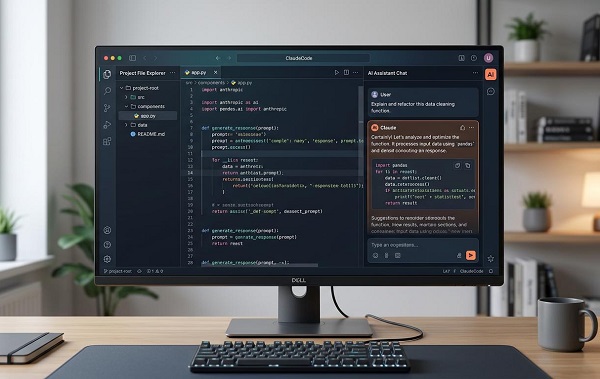
Claude has developed a particularly strong reputation among developers through Claude Code and its agentic programming capabilities. Anthropic says Opus 4.8 was designed to improve coding and agentic workflows.
ChatGPT is also very strong for software development, particularly when coding is combined with research, file analysis, reasoning and other tools.
Gemini has also made significant progress in software engineering. Google’s Gemini 3.8 Flash specifically targets software engineering and long-horizon agentic workflows.
Winner: Claude and ChatGPT
For everyday programming, either can be an excellent choice.
For developers heavily invested in agentic coding workflows, Claude deserves serious consideration.
Which AI Is Best for Research?
Research is more complicated because AI knowledge alone isn’t enough.
The ability to search the web, inspect sources and distinguish reliable information from poor sources is extremely important.
ChatGPT provides web search and deep research capabilities, while Gemini benefits from Google’s search and information ecosystem. Claude also supports web research and citations in its current product experience.
Best choices
ChatGPT: Best overall research workflow.
Gemini: Excellent choice when research involves Google’s ecosystem and multimodal information.
Claude: Excellent for analysing and synthesising complex information after the relevant material has been gathered.
For important topics—especially health, finance, law, education or government information—you should still verify important claims against primary sources.
Which AI Is Best for Images?
This is an area where ChatGPT and Gemini have an advantage over Claude.
ChatGPT supports image generation and image editing, while Google’s ecosystem includes image-generation technologies alongside Gemini. Claude is much more focused on text, reasoning, documents and code, although it can analyse visual material and create visual outputs such as SVG code.
Winner: ChatGPT or Gemini
Choose ChatGPT if you want an AI assistant that combines conversation, reasoning and image creation in one workflow.
Choose Gemini if you want Google’s broader multimodal ecosystem.
Which AI Has the Best Google Integration?
This one is easy.
Winner: Gemini
If your work happens primarily inside:
- Gmail
- Google Docs
- Google Drive
- Google Sheets
- Android
- Google Search
Gemini makes the most sense.
Google has continued integrating Gemini into its products, including Workspace and Android experiences.
So, Which AI Is Best in 2026?
There is no single answer.
Instead, think of the three tools this way:
Choose ChatGPT if you want:
- The best all-round assistant
- Writing and research
- Coding
- Image generation
- Data analysis
- File analysis
- Voice interaction
- A broad AI ecosystem
- One AI for many different tasks
Best overall choice: ChatGPT
Choose Gemini if you want:
- Google Workspace integration
- Android integration
- Multimodal AI
- Large-context document and media processing
- Google-focused productivity
- AI connected to Google’s ecosystem
Best for Google users: Gemini
Choose Claude if you want:
- High-quality long-form writing
- Coding assistance
- Code review
- Complex analysis
- Document-heavy workflows
- Professional knowledge work
- Long-running coding and agentic tasks
Best for writing and technical work: Claude
Final Verdict
The ChatGPT vs Gemini vs Claude debate is no longer really about which company has the smartest chatbot.
All three have become powerful enough that the better question is:
Which AI fits your workflow?
For most people who want one AI that can do almost everything, ChatGPT is the easiest recommendation.
For people deeply invested in Google services, Android and multimodal workflows, Gemini can be the better choice.
For writers, programmers and professionals working with complex documents and technical problems, Claude remains a compelling option.
And there is nothing wrong with using more than one.
In fact, in 2026, a practical strategy may be to use ChatGPT as your general-purpose assistant, Gemini when Google integration or multimodal processing matters, and Claude for demanding writing or coding tasks.
The AI race is moving so quickly that today’s winner may not remain tomorrow’s winner. Google introduced Gemini 3.8 Flash in September, while OpenAI’s GPT-6 Astra is currently rolling out to a limited set of organizations, illustrating just how quickly the landscape is changing.
Frequently Asked Questions
Is ChatGPT better than Gemini in 2026?
ChatGPT is arguably better as an all-purpose AI assistant, while Gemini has major advantages in Google’s ecosystem and multimodal workflows. The better option depends on your needs.
Is Claude better than ChatGPT?
Not universally. Claude can be an excellent choice for writing, coding and complex analysis, while ChatGPT offers a broader collection of features and tools.
Which AI is best for students?
All three can be useful for students. ChatGPT is particularly versatile, Gemini can be useful for students already using Google Workspace, while Claude can be valuable for writing, studying and analysing long documents.
Which AI is best for bloggers?
ChatGPT is a strong overall choice because bloggers can combine research, writing, SEO planning, data analysis and image generation in one workflow. Claude is also excellent for long-form writing.
Can I use ChatGPT, Gemini and Claude together?
Yes. Using multiple AI assistants can actually be useful. You can use one to generate an initial answer and another to review, fact-check or improve it.