Think about the last few websites you visited. Chances are, they didn’t feel like websites at all.
You opened them on your phone, content loaded almost instantly, new stories appeared based on your interests, and you probably never even noticed the browser. The experience felt smooth, personalized, and designed around you. In other words, it felt more like an app.
This shift is happening everywhere. The traditional website, where users click from page to page and wait for each new page to load, is slowly being replaced by faster, smarter, and more interactive experiences. Today’s internet users have become accustomed to platforms like YouTube, TikTok, Netflix, Instagram, and Spotify. These platforms know what users like, remember where they left off, and make content discovery effortless.
As a result, people now expect the same experience from blogs, news sites, magazines, and online publishers.
The question is no longer whether websites are becoming apps.
The real question is whether publishers are ready for the change.
The Modern Reader Has Changed
Not long ago, getting traffic was the biggest priority for most publishers. If people landed on your article, the job was considered done.
Today, that’s not enough.
Readers are overwhelmed with choices. Every minute they’re competing with social media feeds, streaming platforms, messaging apps, online communities, and countless other sources of information.
If your website feels slow, cluttered, or outdated, visitors won’t hesitate to leave. Most won’t give you a second chance.
What readers want now is convenience.
They want content that loads immediately.
They want recommendations that make sense.
They want websites that remember their preferences.
And they want everything to work perfectly on their phones.
In short, they expect experiences that feel more like products than websites.
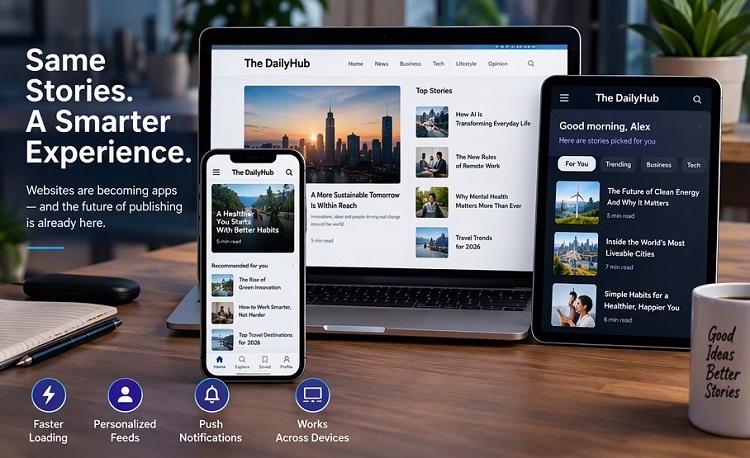
Why App-Like Experiences Are Winning
People don’t necessarily care whether they’re using a website or an app.
They care about the experience.
If a website is just as fast, intuitive, and personalized as an app, users are happy to engage with it.
That’s why publishers across the world are investing heavily in features such as:
- Personalized content feeds
- Push notifications
- Instant page loading
- Dark mode options
- Bookmarking features
- Account-based experiences
- AI-powered recommendations
- Interactive communities
What used to be considered “premium app features” is quickly becoming the new standard for websites.
The publishers thriving today are the ones creating experiences that encourage readers to stay longer and come back more often.
Speed Is No Longer a Luxury
Let’s be honest.
Nobody likes waiting for a website to load.
Even if your content is excellent, readers may never see it if your pages take too long to appear.
A slow website feels outdated. It creates friction. It interrupts the reading experience before it even begins.
Fast-loading websites, on the other hand, create momentum.
Readers move naturally from one article to another. They consume more content. They remain engaged.
For publishers, improving speed may be one of the highest-impact investments available. Optimized images, lightweight themes, efficient hosting, and proper caching can dramatically improve both user satisfaction and search visibility.
The faster your website feels, the more it starts behaving like an app.
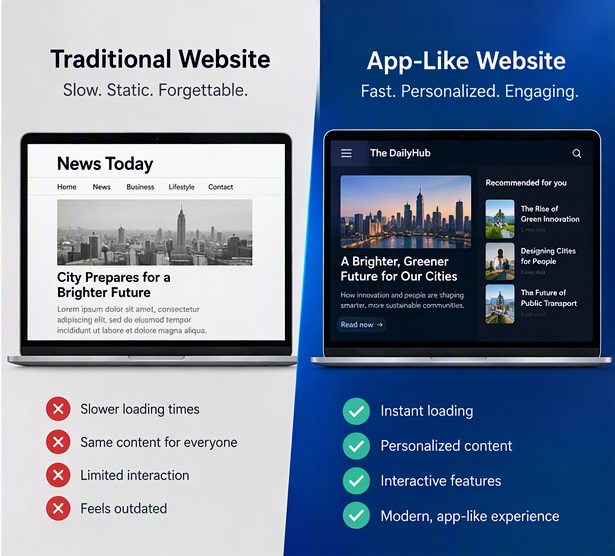
Personalization Is Becoming Essential
Imagine walking into a bookstore where every customer is shown the exact same books regardless of their interests.
It wouldn’t make much sense.
Yet that’s how many publishing websites still operate.
Every visitor sees the same homepage, the same featured articles, and the same recommendations.
Modern audiences expect something better.
If a reader regularly consumes technology content, they should see more technology stories. Someone interested in business should receive business-related recommendations.
Personalization doesn’t have to be complicated.
Even simple content recommendation systems can help readers discover relevant articles and increase engagement significantly.
The goal isn’t to replace editorial decisions.
The goal is to make content discovery easier and more natural.
AI Is Changing Content Discovery
Whenever people hear about AI in publishing, the conversation usually focuses on content creation.
But that’s only part of the story.
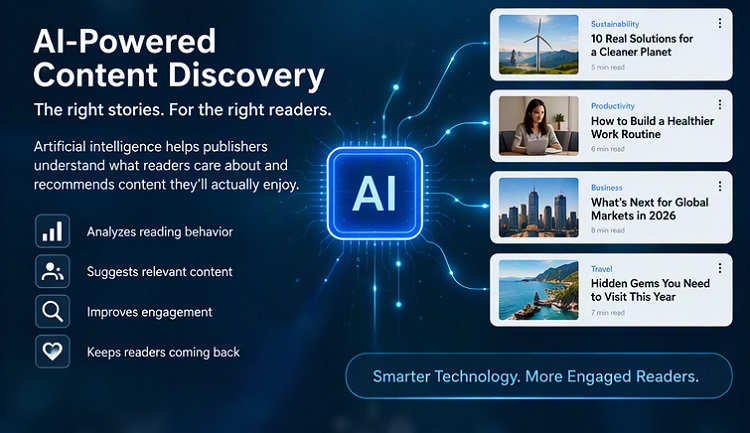
One of AI’s most valuable roles is helping readers find content they’ll genuinely enjoy.
📖 Related Reads
Think about how Netflix recommends movies or how Spotify suggests music.
Publishers can adopt the same mindset.
AI can analyze reader behavior and suggest articles based on interests, reading history, trending topics, and engagement patterns. The result is a more relevant experience for every visitor.
Instead of readers searching endlessly for something interesting, the website helps guide them toward the next article.
That creates a more engaging experience and increases the likelihood they’ll return.
Mobile Is the Main Experience Now
Many publishers still treat mobile optimization as something that happens after the desktop version is built.
That approach is increasingly risky.
For most websites today, smartphones are where the majority of readers come from.
That’s where articles are discovered, shared, and consumed.
A website may look amazing on a large desktop screen, but if it feels frustrating on mobile, readers are likely to leave.
Mobile-first publishing means:
- Clean layouts
- Larger tap targets
- Readable typography
- Faster loading pages
- Optimized images
- Minimal popups
- Smooth navigation
Remember, visitors aren’t comparing your website to another website.
They’re comparing it to every app they use daily.
That’s a much higher standard.
Build Relationships, Not Just Traffic
A lot of publishers are still chasing clicks.
The most successful publishers are building audiences.
There’s a difference.
Traffic comes and goes. A Google update, a social media algorithm change, or a shift in user behavior can impact visitor numbers overnight.
An audience is different.
Subscribers return.
Newsletter readers engage.
Community members participate.
Loyal readers share your content with others.
That’s why publishers should focus on creating direct connections through:
- Email newsletters
- Free registrations
- Membership programs
- Community discussions
- Exclusive content
- Notifications and alerts
The stronger the relationship, the less dependent you become on external platforms.
The Future Belongs to Product-Led Publishing
One of the biggest mindset shifts publishers need to make is thinking less like content producers and more like product builders.
Publishing isn’t just about creating articles anymore.
It’s about creating experiences.
Every feature on your website should answer a simple question:
“Does this make the reader’s experience better?”
The publishers that win over the next few years won’t necessarily produce the most content.
They’ll be the ones that create the most useful, engaging, and enjoyable experiences around their content.
What Publishers Should Do Right Now
If you’re a publisher, blog owner, or media company, here are the priorities that matter most:
- Improve website speed.
- Focus heavily on mobile experience.
- Introduce personalized content recommendations.
- Grow your email subscriber base.
- Explore web push notifications.
- Use AI to improve content discovery.
- Build stronger reader communities.
- Collect first-party audience data responsibly.
- Diversify revenue beyond display ads.
- Treat your website like a product that evolves continuously.
Small improvements in each of these areas can compound into significant audience growth over time.
Final Thoughts
The internet is entering a new phase.
The distinction between websites and apps is fading faster than many publishers realize. Readers are no longer satisfied with static pages and basic navigation. They expect speed, personalization, convenience, and relevant content at every step.
The good news is that publishers don’t necessarily need to build expensive mobile applications to keep up. They simply need to create website experiences that feel as seamless and engaging as the apps people use every day.
The future of digital publishing isn’t just about publishing more content.
It’s about creating experiences readers genuinely enjoy returning to.
And the publishers that understand this shift today will be the ones leading the industry tomorrow.